For a few days recently it was unsafe to walk under our large Flindersia tree. [There are 14 species in the genus and this one is probably F. bourjotiana]. The pods were being dropped from about 20-30 m height!
Each pod measures about 9.5-10.5 cm in length and covered with stout spines. So being hit by one from such a height would not be a pleasant experience.
Most of the pods were chewed and partially opened.
A normal Flindersia pod has 5 star-like arms and a seed in each.
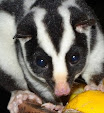
The culprits were masses of Sulphur-crested Cockatoos. With an abundance of riches, the birds would feed partially on a pod and then move to the next one. Multiple pods are borne on stems so many are dropped without a beak mark.
Once on the ground, the pods dry out quickly and open within a day or two. That allows birds and ground dwelling mammals to partake of the riches since most of the seeds are still intact within the pods.
At first one might be upset with the seemingly wanton destruction brought on by the feeding birds. But it does have a beneficial effect of providing food to other animals. Some, like the Musky Rat-Kangaroo, move the seeds away and store them for later use. This disperses the seeds and probably gives rise to new trees well away from the mother-tree.
After about 3 days of concentrated work by hoards of cockatoos, they left and the ground is now littered with the pods that are providing food to other creatures of the forest.
Friday, 31 August 2012
Sunday, 26 August 2012
A Mystery Solved
In a previous blog I noted a couple of caterpillars that I would attempt to rear to maturity. Until now the efforts went unrewarded.
We know the identity of one of them.
To review, I noticed the white caterpillar on tree trunks covered with lichens and algae.
The individuals had an irregular appearance. Dissection of one of them revealed that each was covered with the lichen material that was held in place by threads of silk.
The caterpillars move with an arching gait and travel up and down the trunk over 2m per day. But they always seem to return to nearly the same place each day.
The moth is relatively common and turns up regularly at the light sheet. Seven species of Enispa are known from Australia. It seems that little is known of their habits. Common (1990) records one species, E. plutonis (Lucas), living in spider's webs where they feed on the detritus such as dead leaves and the left-overs from the spider's catch. The caterpillar is naked and not covered with any detritus. Its pupa is suspended without any cocoon by its anal hooks. This is very different from E. prolectus. With E. prolectus, there is a cocoon that is suspended on a stem which is firmly attached to the substrate by silk.
The next step is to find the distinctive cocoons in the habitat. They most likely move to adjacent vegetation or, perhaps, under loose bark. This is in short supply on rainforest trees.
Thanks to Buck Richardson, and his moth identification site, for aid in identifying the moth.
Literature
Common, IFB. 1990. Moths of Australia. Melbourne University Press. Pp. 1-535.
We know the identity of one of them.
To review, I noticed the white caterpillar on tree trunks covered with lichens and algae.
The individuals had an irregular appearance. Dissection of one of them revealed that each was covered with the lichen material that was held in place by threads of silk.
The caterpillars move with an arching gait and travel up and down the trunk over 2m per day. But they always seem to return to nearly the same place each day.
The caterpillars seem to feed on the white-patch lichens but because of the concealment of the mouthparts, it is difficult to determine if they are feeding on anything else. It's obvious that the caterpillars incorporate some of the green material into their camouflage. Ants and other insects travel past the caterpillars and pay them no attention.
This year, the caterpillars were found on palm trunks and the trees where they were last year had no caterpillars on them at all.
I took two of the larger larvae and scraped a few bits of lichen off one of the trunks and placed it in a container. After a few days a cocoon was formed.
The coccoon. Each cocoon was borne on an elongate stem. After 29 days, at room temperature, the moth emerged.
Enispa prolectus (Turner): Noctuidae; Acontiinae
The moth is relatively common and turns up regularly at the light sheet. Seven species of Enispa are known from Australia. It seems that little is known of their habits. Common (1990) records one species, E. plutonis (Lucas), living in spider's webs where they feed on the detritus such as dead leaves and the left-overs from the spider's catch. The caterpillar is naked and not covered with any detritus. Its pupa is suspended without any cocoon by its anal hooks. This is very different from E. prolectus. With E. prolectus, there is a cocoon that is suspended on a stem which is firmly attached to the substrate by silk.
The next step is to find the distinctive cocoons in the habitat. They most likely move to adjacent vegetation or, perhaps, under loose bark. This is in short supply on rainforest trees.
Thanks to Buck Richardson, and his moth identification site, for aid in identifying the moth.
Literature
Common, IFB. 1990. Moths of Australia. Melbourne University Press. Pp. 1-535.
Saturday, 18 August 2012
Orchid Foes--and Friends (a follow-up)
A daily survey of the orchid collection provided this little vignette.
The Orchid Weevil, Orchidophilus aterrimus (Waterhouse) was about to be attacked by a Jumping Spider.
Ah, I thought what a great thing. Biological control in action. But alas, it was not to be.
But after a fraction of a second, the spider released the prey and moved away. Several bouts were observed in just a few minutes time and then the spider hopped away. Note the weevil is firmly attached to the substrate. So that got me to thinking what makes a "successful" pest.
In this instance, perhaps, the spider could not penetrate the tough exoskeleton of the weevil. Entomologists will tell you difficult it is to pin a large weevil. A #5 stainless steel pin often will not penetrate the exoskeleton of the specimen. If this is working in this example, it is surprising the spider's chelicerae could not find a membrane or other soft point to penetrate. But after several attempts it could not.
And, perhaps, the weevil excreted a chemical of some sort that discouraged the spider. But if this were the case, the spider would not have made repeated attempts at capture.
The weevil stayed "glued" in the same position for 15 minutes until I decided it was time for the alcohol treatment. The spider wandered off. There are not many food sources in the shadehouse so I hope the spider will sharpen its chelicerae for the next encounter.
The spider. It is a Jumping Spider, family Salticidae. There is a great spider site on the web dealing with Aussie spiders. But I cannot reliably identify the genus of this little spider so will not guess. Perhaps, a reader will be able to put a name on it.
The Orchid Weevil, Orchidophilus aterrimus (Waterhouse) was about to be attacked by a Jumping Spider.
Ah, I thought what a great thing. Biological control in action. But alas, it was not to be.
But after a fraction of a second, the spider released the prey and moved away. Several bouts were observed in just a few minutes time and then the spider hopped away. Note the weevil is firmly attached to the substrate. So that got me to thinking what makes a "successful" pest.
In this instance, perhaps, the spider could not penetrate the tough exoskeleton of the weevil. Entomologists will tell you difficult it is to pin a large weevil. A #5 stainless steel pin often will not penetrate the exoskeleton of the specimen. If this is working in this example, it is surprising the spider's chelicerae could not find a membrane or other soft point to penetrate. But after several attempts it could not.
And, perhaps, the weevil excreted a chemical of some sort that discouraged the spider. But if this were the case, the spider would not have made repeated attempts at capture.
The weevil stayed "glued" in the same position for 15 minutes until I decided it was time for the alcohol treatment. The spider wandered off. There are not many food sources in the shadehouse so I hope the spider will sharpen its chelicerae for the next encounter.
The spider. It is a Jumping Spider, family Salticidae. There is a great spider site on the web dealing with Aussie spiders. But I cannot reliably identify the genus of this little spider so will not guess. Perhaps, a reader will be able to put a name on it.
Friday, 17 August 2012
Things lepidopterological
Recent night trips on cold (16C!) winter's nights have provided observations to compensate from the distinctly non-tropical temperatures.
Roadsides in the mixed woodlands not far from the rainforest have been clothed in a blanket of bright yellow with the flowering wattles (Acacia spp.). Close examination of the flowers revealed a yellow caterpillar consuming the blossoms.
The arching gait suggested a looper, a member of the Geometridae.
A few were removed with some blossom and after a few days they formed a chrysalis and about 10 days later the moth emerged. This moth has two colour morphs. The brown one shown above and a green morph. It is not uncommon and is often found at lights in the rainforest where there are also acacias but of different species. [Thanks to Ted Edwards for noting the name change for this moth.]
This little moth, a member of the huge family Oecophoridae, was common sitting on grass blades after dark on a very cold evening in the Davies Creek area, Qld. Grass of several species was deep and green.
One might think the moth is therefore associated with grasses. Well it might be but a female was observed ovipositing (egg-laying) in the bark of a Baker's Oak, Allocasuarina torulosa.
Ovipositing female.
Perhaps, the eggs hatch and the tiny larvae drop to the ground and live on grass roots until they emerge and then sit on the grass blades after dark. Laying ones eggs in bark at the base of a tree like Baker's Oak is a rather precarious activity late in the winter at this locality. Soon the "fireies" will be setting the habitat ablaze with their "prescribed" burning. From the looks of the trees in the area, this a regular process. It would be very lucky for the eggs of this moth to survive what appears to be ahead for this habitat. But then, obviously some do survive such treatment.
Roadsides in the mixed woodlands not far from the rainforest have been clothed in a blanket of bright yellow with the flowering wattles (Acacia spp.). Close examination of the flowers revealed a yellow caterpillar consuming the blossoms.
The arching gait suggested a looper, a member of the Geometridae.
Traminda rubra Holloway: Geometridae; Sterrhinae
B Richardson photo
B Richardson photo
A few were removed with some blossom and after a few days they formed a chrysalis and about 10 days later the moth emerged. This moth has two colour morphs. The brown one shown above and a green morph. It is not uncommon and is often found at lights in the rainforest where there are also acacias but of different species. [Thanks to Ted Edwards for noting the name change for this moth.]
This little moth, a member of the huge family Oecophoridae, was common sitting on grass blades after dark on a very cold evening in the Davies Creek area, Qld. Grass of several species was deep and green.
One might think the moth is therefore associated with grasses. Well it might be but a female was observed ovipositing (egg-laying) in the bark of a Baker's Oak, Allocasuarina torulosa.
Ovipositing female.
Perhaps, the eggs hatch and the tiny larvae drop to the ground and live on grass roots until they emerge and then sit on the grass blades after dark. Laying ones eggs in bark at the base of a tree like Baker's Oak is a rather precarious activity late in the winter at this locality. Soon the "fireies" will be setting the habitat ablaze with their "prescribed" burning. From the looks of the trees in the area, this a regular process. It would be very lucky for the eggs of this moth to survive what appears to be ahead for this habitat. But then, obviously some do survive such treatment.
Orchid Foes Revisited
The site of these feet on the developing flower stalk of a treasured orchid is a cause for some concern.
This is one of the orchid weevils, Orchidophilus aterrimus (Waterhouse). I have written about this before. Several adults of both sexes have been found on developing stalk. Where the larvae reside is not known but I suspect they occur in the pseudobulbs of the plants themselves.
A few days after feeding this spot appeared on the stem apparently where the weevil had inserted its beak to feed. I'll watch this and see if it results in any damage to the flowers.
A few days later, this critter was found feeding on the developing flower stem of Dendrobium speciosum. Closer examination revealed what it is.
The lines on the thorax are the giveaway.
It is a nymph of a species of Siphanta. I have written about these before as well. I have no data on what this single nymph might have done to the developing flowers, but it was not given the chance to proceed with its development! Spring is springing.
A few days after feeding this spot appeared on the stem apparently where the weevil had inserted its beak to feed. I'll watch this and see if it results in any damage to the flowers.
A few days later, this critter was found feeding on the developing flower stem of Dendrobium speciosum. Closer examination revealed what it is.
The lines on the thorax are the giveaway.
It is a nymph of a species of Siphanta. I have written about these before as well. I have no data on what this single nymph might have done to the developing flowers, but it was not given the chance to proceed with its development! Spring is springing.
Wednesday, 1 August 2012
An Unexpected Discovery
Three times in 12 years Emerald Forest Doves have mistaken our windows as extensions of their forest habitat and have paid the price. Yesterday one bird met its fate. When I picked it up I noticed a very large (relative to the size of the bird) Louse Fly. I have written about these flies before when they showed up at the light sheet. Louse Flies are external parasites of birds and mammals in the family Hippoboscidae. You can get an idea of the diversity of the family from the images on the site.
Louse flies are remarkably adapted for existence in bird feathers. Some species detach their wings when they have found the proper host. Eggs mature within the mothers and the living larvae are deposited away from the host and they have to undergo the lottery that many parasites are forced to endure. The right host has to come along at the right time for the larvae to continue their development.
The flattened appearance of the adult likens them to lice, hence the common name. Several are parasites of livestock and are transported around the world on their hosts. Australia has several introduced species that are just such pests.
The fly measured approximately 11mm in length.
The business end. The piercing mouthparts enable the fly to suck blood from the host, probably from the feathers. The flies are very fast-moving. This enables the fly to dodge the preening activities of the bird without being harmed by its beak.
But nothing is straight-forward in this world. The odd creature below was also found within the feathers of the poor bird.
It is may not associated with this fly. It does not seem to be a puparium. So what is it? Maybe a reader will shed some light on the subject.
Frontal view. It does not seem to be a larva. It did not move and there seems to be no opening in the midst of the teeth-like structures. Any ideas?
Along related lines, have a look at Piotr's blog on another, much more robust, parasitic fly.
Louse flies are remarkably adapted for existence in bird feathers. Some species detach their wings when they have found the proper host. Eggs mature within the mothers and the living larvae are deposited away from the host and they have to undergo the lottery that many parasites are forced to endure. The right host has to come along at the right time for the larvae to continue their development.
The flattened appearance of the adult likens them to lice, hence the common name. Several are parasites of livestock and are transported around the world on their hosts. Australia has several introduced species that are just such pests.
The fly measured approximately 11mm in length.
The business end. The piercing mouthparts enable the fly to suck blood from the host, probably from the feathers. The flies are very fast-moving. This enables the fly to dodge the preening activities of the bird without being harmed by its beak.
But nothing is straight-forward in this world. The odd creature below was also found within the feathers of the poor bird.
It is may not associated with this fly. It does not seem to be a puparium. So what is it? Maybe a reader will shed some light on the subject.
Frontal view. It does not seem to be a larva. It did not move and there seems to be no opening in the midst of the teeth-like structures. Any ideas?
Along related lines, have a look at Piotr's blog on another, much more robust, parasitic fly.
Thursday, 26 July 2012
The Humble Mole Cricket
Almost every gardener is familiar with Mole Crickets. They have a very distinctive appearance and are encountered when digging is loose soil or in soil that is wet. They are frequently attracted to lights.
Mole crickets are often accorded their own separate family, the Gryllotalpidae. That's where they are placed in the Orthoptera Species File. However, in the bible of Australian cricket taxonomy, they are considered a subfamily of the large cricket family, the Gryllidae.
Australia has a great diversity of Mole Crickets. Most are in one genus, Gryllotalpa. Over 20 species are known. They are distributed across the continent even in the most arid areas where they are concentrated around sinks and watercourses. There are some species that defy the tradition that they are always associated with water. I found a new species at the top of Mt Franklin in the Australian Capital Territory where it was living in leaf litter amongst house-sized boulders.
Mole Cricket species are tough to identify. The calling song of the male is the distinctive feature. Females of some species also produce sounds, probably in defense of their eggs in the chambers of their burrows.
A stylised version of the mole cricket in its chamber. (From the web).
Some species use the chamber as an amplifier and the singing male perches at the entrance and rotates his body 360 degrees as he produces his song. That is why it is often so difficult to locate a singing male. The sound seems to come from everywhere or nowhere! And most species sing only for a few minutes and that is at dusk when visibility is not good. They cease calling a the slightest disturbance. Calling can be initiated in late afternoons when lawns are watered. But this will only last for a few minutes.
The Mole Cricket in the photograph is in the Monanka Species Group based on the combination of the large ocelli (false eyes), the presence of subapical spines on the hind legs. Beyond that it could either be G. monanka Otte and Alexander of G. coarctata Walker. Beyond that, identification is conjecture as the two species are often found together.
Highly modified for digging, mole crickets are like little bull dozers as they tunnel thought the soil.
The forelegs are highly modified with trowel-like spines that shift the dirt as the cricket moves through the soil.
Most of the Australian species are in the genus Gryllotalpa but there is a potential problem with an introduced pest, the Changa, Scapteriscus didactylus (Latreille), a South American species that causes damage to a diversity of crops. It was introduced into the Newcastle, NSW region in the early 1980's apparently in ship's ballast which was used for golf courses in the Maitland and Wallsend area. Tunneling mole crickets do not meet with the approval of golfers! They make the surface of the ground uneven and their tunneling often breaks through causing hills and dales. This cricket is very distinctive. It is much larger than normal Australian mole crickets and has two instead of for "dactyls" (A fancy word for the finger-like claws on the foreleg). (See paper below for details).
Mole cricket biology is in its infancy in Australia. Not much has been done in this respect since the work of Normal B. Tindale in 1928. And this brings us to the larger than life figure of Tindale. He was born in 1900 in Perth. He was influenced into science by his father but during an experiment in his father's photographic lab, Tindale was involved in an explosion and permanently lost the sight of one eye. This did not discourage him. He decided to continue with science and his inspiration was Alfred R. Wallace.
Tindale is claimed by entomologists and anthropologists alike. An inspirational read is his obituary by Philip G. Jones. Tindale's entomological accomplishments are many. He was associated mostly with the South Australian Museum and there is a hall there named in his honour. Aside from detailed work on the taxonomy and biology of Australian Mole Crickets, Tindale was the world's expert on Ghost moths, the Hepialidae. Not only did he work out the taxonomy of these moths but he studied the intricate habitats of their peculiar larval biology and the odd behaviour of the adults. He was also an ornithologist, geologist and a linguist. During World War II he spent time at the Pentagon decoding and translating Japanese transmissions intercepted by the Allies. He was unable to enroll in the active military because of the loss of sight in his one eye.
But some of Tindale's most notable accomplishments were in the field of Anthroplogy. This began in 1921 with a trip to Groote Eylant where he initiated studies of the aboriginal community. He was associated with Sir Walker Baldwin Spencer who encouraged him to take detailed notes every day. Thus began a wonderful career as noted below in the notes from Jones' obituary.
"Looking back on Tindale's career it is possible to discern half a dozen research paths which he followed, converging and diverging but persisting across several decades until his death. Few specialists would attempt to emulate such a course today; in Tindale's time, as his colleague and friend Joseph Birdsell put it later, it represented the 'proper breadth of interest'. In entomology, his first love, Tindale selected the study of the Hepialidae, one of the most primitive of the moth families; in geology his particular interest became the study of Pleistocene shore-lines and Tindale was to become recognised as one of the 'foremost workers on the Pleistocene geology of Australia' (Daily 1966). In linguistics as in broader anthropological studies his object was to gather sufficient data to scientifically describe variation in Aboriginal culture and society across the country. The same applied to his physical anthropological surveys. More focused studies, such as an investigation of initiation practice, Western Desert art and mythology, or the detailed description of a coastal and riverine society, followed from this survey data. In archaeology, informed by his geological and ecological training, Tindale's object was to establish the broad canvas on which more specific applied or theoretical investigations could be painted. Tindale's field trips became the testing ground for this tumult of ideas and theories against a background of wide reading in each area and constant rapport with colleagues, nationally and internationally."
I met Tindale personally in the 1960's when he visited the California Academy of Sciences. He was living at Palo Alto, just south of San Francisco where the Academy is located. I had no idea at that time that I would ever even visit Australia, let alone establish a career there. Tindale was a personable and encouraging person. I always recall this meeting and was I was privileged to dedicate a widespread southern, Shield-backed Katydid species, Oligodectoides tindalei Rentz, in his honour. Remember he did all this research with only one eye!
Literature
Rentz, DCF 1995. The Changa Mole Cricket, Scapteriscus didactylus (Latreille), a New World pest established in Australia. (Orthoptera Gryllotalpidae). Journal of the Australian Entomological Society 34: 303-306.
Mole crickets are often accorded their own separate family, the Gryllotalpidae. That's where they are placed in the Orthoptera Species File. However, in the bible of Australian cricket taxonomy, they are considered a subfamily of the large cricket family, the Gryllidae.
Australia has a great diversity of Mole Crickets. Most are in one genus, Gryllotalpa. Over 20 species are known. They are distributed across the continent even in the most arid areas where they are concentrated around sinks and watercourses. There are some species that defy the tradition that they are always associated with water. I found a new species at the top of Mt Franklin in the Australian Capital Territory where it was living in leaf litter amongst house-sized boulders.
A stylised version of the mole cricket in its chamber. (From the web).
Some species use the chamber as an amplifier and the singing male perches at the entrance and rotates his body 360 degrees as he produces his song. That is why it is often so difficult to locate a singing male. The sound seems to come from everywhere or nowhere! And most species sing only for a few minutes and that is at dusk when visibility is not good. They cease calling a the slightest disturbance. Calling can be initiated in late afternoons when lawns are watered. But this will only last for a few minutes.
The Mole Cricket in the photograph is in the Monanka Species Group based on the combination of the large ocelli (false eyes), the presence of subapical spines on the hind legs. Beyond that it could either be G. monanka Otte and Alexander of G. coarctata Walker. Beyond that, identification is conjecture as the two species are often found together.
Highly modified for digging, mole crickets are like little bull dozers as they tunnel thought the soil.
The ocelli are the two white convergent ovoid structures just above the black eyes.
The forelegs are highly modified with trowel-like spines that shift the dirt as the cricket moves through the soil.
Most of the Australian species are in the genus Gryllotalpa but there is a potential problem with an introduced pest, the Changa, Scapteriscus didactylus (Latreille), a South American species that causes damage to a diversity of crops. It was introduced into the Newcastle, NSW region in the early 1980's apparently in ship's ballast which was used for golf courses in the Maitland and Wallsend area. Tunneling mole crickets do not meet with the approval of golfers! They make the surface of the ground uneven and their tunneling often breaks through causing hills and dales. This cricket is very distinctive. It is much larger than normal Australian mole crickets and has two instead of for "dactyls" (A fancy word for the finger-like claws on the foreleg). (See paper below for details).
Mole cricket biology is in its infancy in Australia. Not much has been done in this respect since the work of Normal B. Tindale in 1928. And this brings us to the larger than life figure of Tindale. He was born in 1900 in Perth. He was influenced into science by his father but during an experiment in his father's photographic lab, Tindale was involved in an explosion and permanently lost the sight of one eye. This did not discourage him. He decided to continue with science and his inspiration was Alfred R. Wallace.
Tindale is claimed by entomologists and anthropologists alike. An inspirational read is his obituary by Philip G. Jones. Tindale's entomological accomplishments are many. He was associated mostly with the South Australian Museum and there is a hall there named in his honour. Aside from detailed work on the taxonomy and biology of Australian Mole Crickets, Tindale was the world's expert on Ghost moths, the Hepialidae. Not only did he work out the taxonomy of these moths but he studied the intricate habitats of their peculiar larval biology and the odd behaviour of the adults. He was also an ornithologist, geologist and a linguist. During World War II he spent time at the Pentagon decoding and translating Japanese transmissions intercepted by the Allies. He was unable to enroll in the active military because of the loss of sight in his one eye.
But some of Tindale's most notable accomplishments were in the field of Anthroplogy. This began in 1921 with a trip to Groote Eylant where he initiated studies of the aboriginal community. He was associated with Sir Walker Baldwin Spencer who encouraged him to take detailed notes every day. Thus began a wonderful career as noted below in the notes from Jones' obituary.
"Looking back on Tindale's career it is possible to discern half a dozen research paths which he followed, converging and diverging but persisting across several decades until his death. Few specialists would attempt to emulate such a course today; in Tindale's time, as his colleague and friend Joseph Birdsell put it later, it represented the 'proper breadth of interest'. In entomology, his first love, Tindale selected the study of the Hepialidae, one of the most primitive of the moth families; in geology his particular interest became the study of Pleistocene shore-lines and Tindale was to become recognised as one of the 'foremost workers on the Pleistocene geology of Australia' (Daily 1966). In linguistics as in broader anthropological studies his object was to gather sufficient data to scientifically describe variation in Aboriginal culture and society across the country. The same applied to his physical anthropological surveys. More focused studies, such as an investigation of initiation practice, Western Desert art and mythology, or the detailed description of a coastal and riverine society, followed from this survey data. In archaeology, informed by his geological and ecological training, Tindale's object was to establish the broad canvas on which more specific applied or theoretical investigations could be painted. Tindale's field trips became the testing ground for this tumult of ideas and theories against a background of wide reading in each area and constant rapport with colleagues, nationally and internationally."
I met Tindale personally in the 1960's when he visited the California Academy of Sciences. He was living at Palo Alto, just south of San Francisco where the Academy is located. I had no idea at that time that I would ever even visit Australia, let alone establish a career there. Tindale was a personable and encouraging person. I always recall this meeting and was I was privileged to dedicate a widespread southern, Shield-backed Katydid species, Oligodectoides tindalei Rentz, in his honour. Remember he did all this research with only one eye!
Literature
Rentz, DCF 1995. The Changa Mole Cricket, Scapteriscus didactylus (Latreille), a New World pest established in Australia. (Orthoptera Gryllotalpidae). Journal of the Australian Entomological Society 34: 303-306.
Subscribe to:
Posts (Atom)


+1241.jpg)