Translate

Showing posts with label Mt Baldy. Show all posts

Friday, 23 December 2016

An Evening on Mt Baldy, Atherton, Queensland

Mt Baldy is located near the north Queensland town of Atherton. It is a combination of National and State Forests. It is a sensibly managed "mutli-use" area. It combines nature and recreation. The lower slopes are vegetated by eucalyptus-acacia woodland. This area is burned from time to time, presumably to preserve the "open aspect" of the habitat. The higher slopes of the mountain is dense rainforest. The other use of the place if for bike riding, both recreational and mountain bikes. Trails are maintained and, judging by the numbers of folks that use them it is a successful venture.

Naturalists find the area especially interesting for reptiles, amphibians and especially possum-watching. You never know who you find wandering around the woods after dark.

Buck Richardson and I visit several spots on the mountain each year. Each habitat has a distinctive flora and fauna. Disappointment occurs when we discover that a favourite spot has been torched. It takes a few years for the plants and animals to recover--if they really do.

Surprisingly, the Atherton area has received more rainfall in the last year than the coastal area near Cairns. We were delighted to find tall grass and flowering shrubs there the other night. Here are some highlights.
Christmas Beetles, afterall it is the Christmas Season
Anoplognathus aeneus: Buck Richardson photo

Anoplognathus sp: Buck Richardson photo
 Anthela astata Buck Richardson photo
 Astata heliconia: Buck Richardson photo
 Bracca rotundata: Buck Richardson photo
Buzara infractaffinis: Buck Richardson photo
 Chalciope alcyona: Buck Richardson photo
 Eumelea duponchelii: Buck Richardson photo
 Grammodes justa: Buck Richardson photo
 Metasia delotypa: Buck Richardson photo
 Opodiphthera eucalypti: Buck Richardson photo
 Spilosoma canescens: Buck Richardson photo

 Cephalogryllus tau male, a noisy burrowing cricket from the rainforest.
 Cephalogryllus tau male
The same cricket after removal from its burrow. The short wings are used solely for sound production and the sound is very loud in this species with each male making a stuttering call, the cacophony in no way co-ordinated and sounding like a continuous ear-piercing chirping.
Trigonidium killawarra female: Buck Richardson photo
Finding this little cricket on Mt Baldy was a surprise. It was known previously from Byfield, just north of Rockhampton, central Queensland.
 Carbrunneria marci, a cockroach not often seen or collected but quite common in the Mt Baldy area.
 Carbrunneria marci
 Carbrunneria marci
Carbrunneria windsorana
Described from the Mt Windsor Tableland but much more widespread. Very skittish when approached, this cockroach lives in leaf litter during the day but ascends to the foliage to "graze" on particulate matter after dark.
 Ectoneura minima, a very small, common and agile cockroach that may be part of a large group of species all give the same name at present. The cockroaches live under bark and in crevices during the day and emerge after dark to feed and make. This one is feeding on a native daisy.
Click Beetle: Elateridae
 Longicorne, family Cerambycidae. Beetle collectors find that longicorne beetles are attracted to lights. some seem to show up well after midnight.

 Undescribed genus, Agraeciinae
This katydid is common and known from a number of localities on the Atherton Tableland. It has not been found in the Kuranda area nor in the Daintree.
 Orange Ringlet: Hypocyta adiante
 Paratemnopteryx centralensis This common, widespread cockroach is like "greased lightning" and is very difficult to photograph.
 Rhabdoblatta sp. Common in and on the margins of the rainforest but it gives way to its relative, Calolampra species in drier, non-rainforest habitats.
 Sipyloidea sp
One of several species of the genus one might encounter at night on Mt Baldy.
 Northern Crown Snake: Cacophis churchilli
Supposedly common but nocturnal. Poisonous but not very toxic to humans. Feeds mostly on skinks.
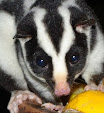
Best to sleep up here, off the ground, with all those snakes about!


Saturday, 1 September 2012

A Cold Night On Mt Baldy

It was a cold late winter's night with the wind blowing, trees creaking and mist blanketing the tree tops. We thought we were in for a poor night.

It seemed that not much was on offer.

A few dung beetles were at the ready:

But they had to be optimistic as we saw only a bandicoot. However, wild pigs had dug up the gutters of the dirt track looking for whatever they could find.

A few frogs were about


I suspect if was slim pickings for the frog population, especially those waiting on leaf surfaces.

Three cockroach species provided the interest for me. All are in the large and varied Australian endemic genus Johnrehnia. [The peculiar generic name is easily explained. It was named in honour of John W. H. Rehn, son of the famous Philadelphia entomologist, James A. G. Rehn. John studied cockroaches, especially their wing venation and how it relates to their classification.]

Two of the three species illustrated below were already known from Mt Baldy. The third was seen for the first time.
 Johnrehnia lakebarrina Roth was described from Lake Barrine, of course. The lake is not far from Mt Baldy. This attractive cockroach lives in leaf litter during the day but emerges after dark to feed on the bits and pieces of particulate matter that accumulates on leaf surfaces.
 Johnrehnia tibrogargana Roth was named for Mt Tibrogargan, one of the peaks in the Glasshouse Mountains of southern Queensland. It was a poor choice of names because even at the time it was described, it ws known from a number of localities along the coast and inland north to Cooktown. J. tibrogargana is common on leaves after dark but on this evening it seemed too cold for it to do much more than wander about in the leaf litter on the ground. On warmer evenings this cockroach is fast-moving and readily flies at the slightest disturbance.
Johnrehnia ruggi Roth was the find of the evening. This species was named in honour of Dr Doug Rugg, former student of Dr H. Rose, University of Sydney. This species appears to be restricted to leaf litter and does not ascend to feed on leaves after dark. That is probably why we had not seen it in the past. All that we saw wereon the ground and several were in cracks and did not appear to be interested moving much farther abroad.

 Johnrehnia species were placed in three species groups by Roth based on the shape of the male's subgenital plate. This is a distinctive structure used in cockroach taxonomy. Both J. tibrogargana and J. ruggi were placed in the Tibrogargana Group.

The subgenital plate consists of all sorts of gadgets having to do with copulation. Below we see the plate itself plus some of the internal structures comprising rods, hooks and the like. One of the neat things about cockroaches is that in many species their genitalia are not bilaterally symmetrical. This means that the left side is different from the right. So if a successful mating is to take place, the bits of the male must fit into specific counterparts in the female. If not, then a successful mating may not be achieved.
 J. tibrogargana, male subgenital plate, dorsal view. (Modified from Roth, 2000)

J. ruggi, male subgenital plate, dorsal view. (Modified from Roth, 2000)

Taxonomists use the shapes of the bits and pieces of the male subgenital plate to help identify species. There are many other features of a cockroach that are distinctive as well. But it is easy to see the differences in the two species above.

Tibrogargana Group species, and there are five of them, have the hind margin of the plate complex with the corners with setal and spine-like structures. In addition, the subgenital plate is not flat but subcylindrical. Here is is illustrated and flattened out.

J. lakebarrina male subgenital plate, dorsal view. (Modified from Roth, 2000)

It is easy to see the differences in the subgenital plate of this species when compared to the two above. It is a member of the Hodgkini Group along with more than twenty other species. This group is distinctive in that its species have the hind margin of the plate simple with the right and left styles (the appendages in the middle) dissimilar, the left one being small and cylindrical. In addition, the plate lies flat and is not subcylindrical.

So there is more to a cockroach than most people realise. They are complex and interesting organisms that have been around long before the dinosaurs. Australia has a remarkably large fauna of these insects. Only a half dozen species cause problems. All of the others (over 500 in Australia!) are at home in their habitats which do not include human dwellings. They are extremely common, especially in forests. They must be very important in the decomposition of leaf litter and the ultimate health of most habitats. Many are very colourful and attractive. You will be seeing more of these in the future!

Literature

Roth, LM. 2000. The Australian cockroach genus Johnrehnia Princis (Blattellidae; Blattellinae) Oriental Insects, 34: 83-192.